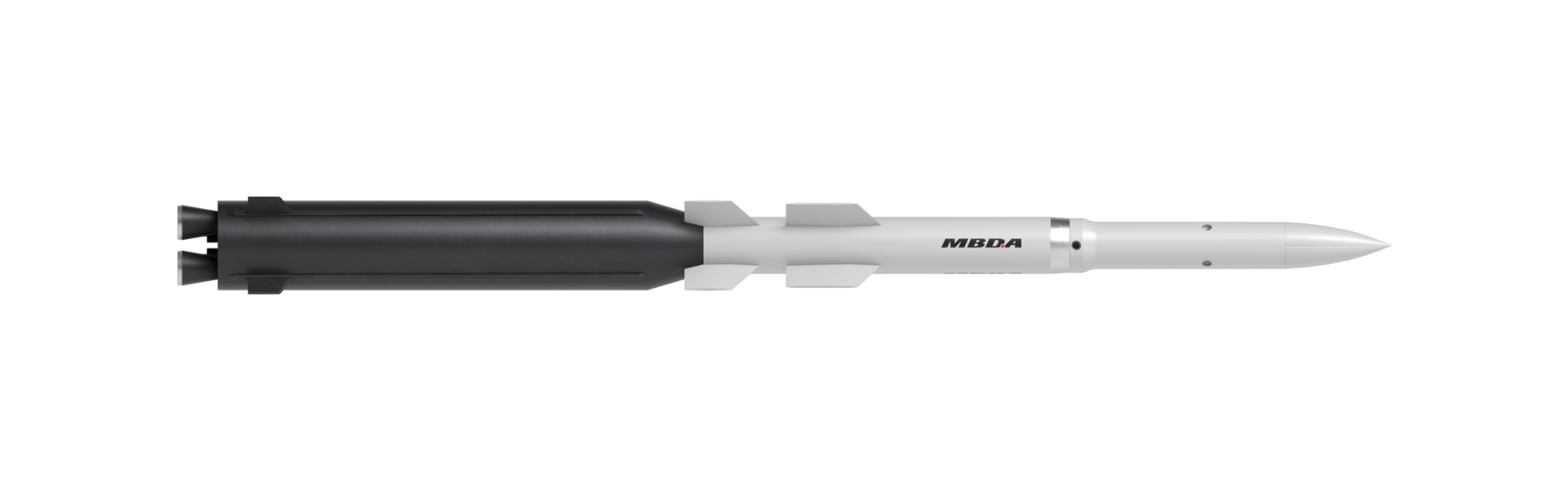

Key features
-
3 stage architecture (Booster accelerator, Cruiser and Kill-Vehicle) for a long range and high altitude interception of high velocity manoeuvring threats
-
Integration in various standards of launchers
-
High bird-flight velocity to ensure fast reaction and compatibility with weapon system’s projected sensor suite
-
Thrust modulation for a flexible cruise phase to recover predicted impact point variations
-
High precision terminal guidance and agile KV control to maximise threat neutralisation
About AQUILA
A Cutting-Edge Solution Designed to Detect, Track and Intercept Hypersonic Threats
AQUILA is MBDA’s first interceptor concept specifically designed to counter hypersonic threats. It embodies a new generation of endo-atmospheric defence, reinforcing MBDA’s air-defence portfolio and ensuring more durable and effective protection of high value assets and deployed forces in an increasingly contested environment.
Shaping Europe’s Future Counter-Hypersonic Architecture
AQUILA’s strategic value aligns closely with Europe’s ambition to enhance its technological sovereignty and resilience against advanced threats. AQUILA is being developed as part of the HYDIS (HYpersonic Defence Interceptor System) programme, a European initiative supported by the European Defence Fund (EDF), co-funded by four Participating States (France, Germany, Italy and The Netherlands), coordinated at industrial level by MBDA and managed by OCCAR (the Organisation for Joint Armament Co-operation). The project is technically coordinated from an international joint engineering plateau.

The HYDIS consortium brings together 19 partners and more than 30 subcontractors from 14 countries, uniting major defence industrial players, research organisations, innovative SMEs, and universities. HYDIS forms a central pillar of Europe’s collective effort to build a credible, future-ready counter-hypersonic capability. By maturing critical technologies and evaluating potential interceptor architectures, the initiative aims to identify the optimal solution for addressing the defence challenges of the coming decades.
Demonstrating MBDA’s Ability to Innovate Against Emerging Threats
Over the past decade, the rapid development of hypersonic systems has revealed a significant strategic challenge: the need for fully effective means to counter these new and highly sophisticated threats. Hypersonic weapons, whether manoeuvring ballistic missiles, hypersonic cruise missiles, or hypersonic glide vehicles, represent a substantial evolution from traditional ballistic systems. Their combination of extreme speed and highly unpredictable flight paths renders them exceptionally difficult to detect, track, and intercept.
To meet this challenge, MBDA has significantly invested in research and development to explore new concepts tailored to the demands of advanced endo-atmospheric defence. This effort has led to the development of AQUILA. Designed to operate within the atmosphere and to keep pace with the rapidly evolving hypersonic domain, AQUILA is conceived as both a land-based and ship-based interceptor. It will complement the proven ASTER missile family and strengthen integrated air and missile defence architectures, offering enhanced protection against emerging threats.
Funded by the European Union. Views and opinions expressed are however those of the author(s) only and do not necessarily reflect those of the European Union or OCCAR. Neither the European Union nor the granting authority can be held responsible for them.
Gallery


Latest news
-
18 Jun 2026
HYDIS
 A pan-European Consortium to defend Europe against the hypersonic threat
 -
11 Jun 2026
Eurosatory
Eurosatory 2026: MBDA evolves its portfolio to power Europe and its allies rearmament -
11 Sep 2025
DSEI 2025
 DSEI 2025: The European cooperation at the heart of MBDA activities


-

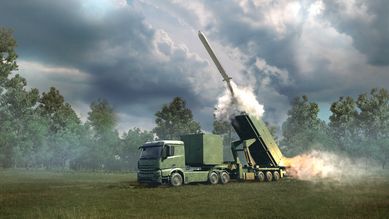
SAMP/T NG will replace the SAMP/T in the Italian and French armed forces, providing improved...
-

SEA VIPER Evolution will future proof the Royal Navy’s maritime Air Defence capability against...
-

The ASTER family comprises ASTER 15 for short to medium-range missions, and ASTER 30 and its...


Customer Support and Services
The centre of MBDA’s relationship with its customers
The centre of MBDA’s relationship with its customers

At MBDA we are committed and present throughout our products’ full life cycle.