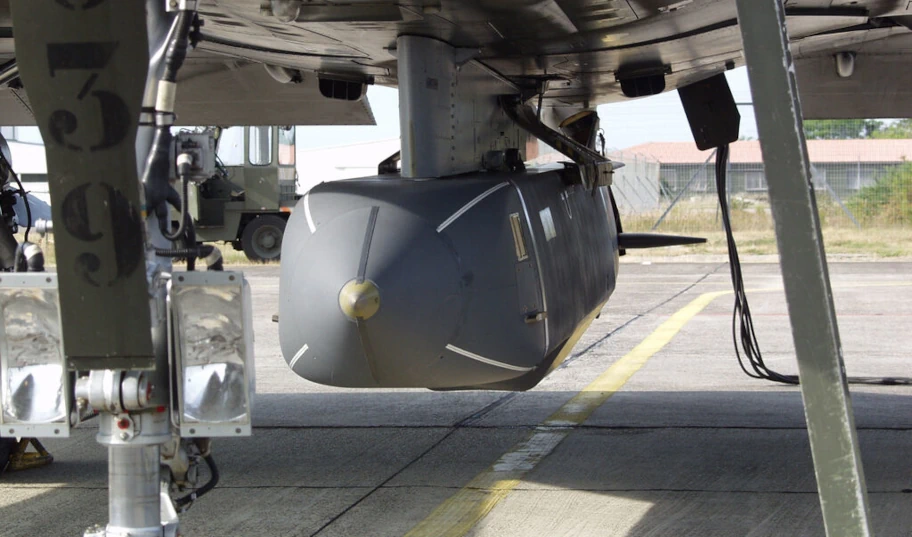
Energy Driving Missile Performance
In physics, energy is the capacity to perform work and generate motion, whether mechanical, thermal or electrical. Within a missile, it constitutes the unseen force that sustains every critical function. While propulsion systems such as turbojets or ramjets generate thrust, fuel must be pumped into the combustion chambers, onboard computers must calculate trajectories, and inertial and guidance systems must remain continuously electricity powered throughout the mission.
The main onboard power employed is thermal batteries, accounting for nearly 90 per cent of operational systems. They remain inert for years and offer exceptional storage safety. Upon activation, their core is heated to approximately 600°C, triggering electrochemical reactions that deliver electrical power for a strictly defined period, corresponding to the mission duration. Single-use but robust and reliable, they are particularly suited to one-shot systems like our missiles.
Rechargeable batteries serve a complementary role. “Unlike thermal batteries, they have the benefit of being reusable, which is valuable throughout testing,” explains Thierry, energy expert at MBDA. Their reusability makes them indispensable during development and qualification phases. Moreover, research driven by various sectors has significantly increased energy density within compact volumes. Nonetheless, rechargeable battery entail operational constraints: they must be charged prior to use, which may delay mission readiness, and their storage requires rigorous safety management to mitigate fire risk.

Exploring Next-Generation Energy for Strategic Advantage
Current research is exploring other complementary solutions for future weapon systems, such as high-performance lithium primary cells capable of remaining charged throughout their entire service life of missile. Moreover, sodium-ion technology, already deployed in small-scale applications, is also being studied as a sovereign and scalable solution for future drones and remote carriers.
The underlying objective of these innovations remains constant: to embed greater energy within smaller, lighter and safer systems. Future missiles’ effectiveness will depend not solely on propulsion or guidance sophistication, but also on the silent mastery of onboard power. Energy, far from being a secondary consideration, lies at the very heart of operational credibility and strategic autonomy.
Engineering Reliability Under Extreme Conditions
“Safety is a critical aspect of our architectures,” insists Guillaume, chief design engineer on French programmes at MBDA, since beyond the energy constraints required to operate onboard systems, the overall design and architectural approach of missiles is inherently strategic and constantly evolving through innovation.
Upon launch, a missile may encounter intense cold at altitude, followed by severe aerodynamic heating at high speed. Vibrations, shocks and thermal gradients impose constant demands on embedded power systems. An onboard energy source must therefore occupy a strategic position within the overall system architecture, ensuring it never endangers operators nor compromises the launcher platform.
Extensive aggression testing is conducted to guarantee robustness against thermal runaway, while electrical architectures are meticulously designed to prevent short circuits or uncontrolled discharge. Close collaboration between mechanical and electrical engineers is essential: if a battery cannot withstand temperatures exceeding 100°C, insulation, cooling or reheating solutions must be integrated accordingly.
The challenge lies in ensuring that every subsystem, from the flight computer to the alternator or thermal battery or rechargeable battery, operates in harmony, without interfering with each other.